


CAS 7440-05-3 Pd nanopolvo de paladio ultrafino como catalizador
Tamaño: 20-30nm Pureza: 99.95% Nº CAS: 7440-05-3 ENINEC No.:231-115-6 Apariencia: Polvo negro Forma: esférica

Tamaño: 20-30nm Pureza: 99.95% Nº CAS: 7440-05-3 ENINEC No.:231-115-6 Apariencia: Polvo negro Forma: esférica
Podemos suministrar productos de diferentes tamaños de polvo de siliciuro de niobio de acuerdo con los requisitos del cliente. Tamaño: 1-3um; Pureza: 99.5%; Forma: granular No. CAS: 12034-80-9; ENINEC No.:234-812-3
La partícula de Ni2Si, 99.5% de pureza, forma granular, se utiliza para el circuito integrado microelectrónico, película de siliciuro de níquel, etc. Tamaño: 1-10um; No. CAS: 12059-14-2; ENINEC No.:235-033-1
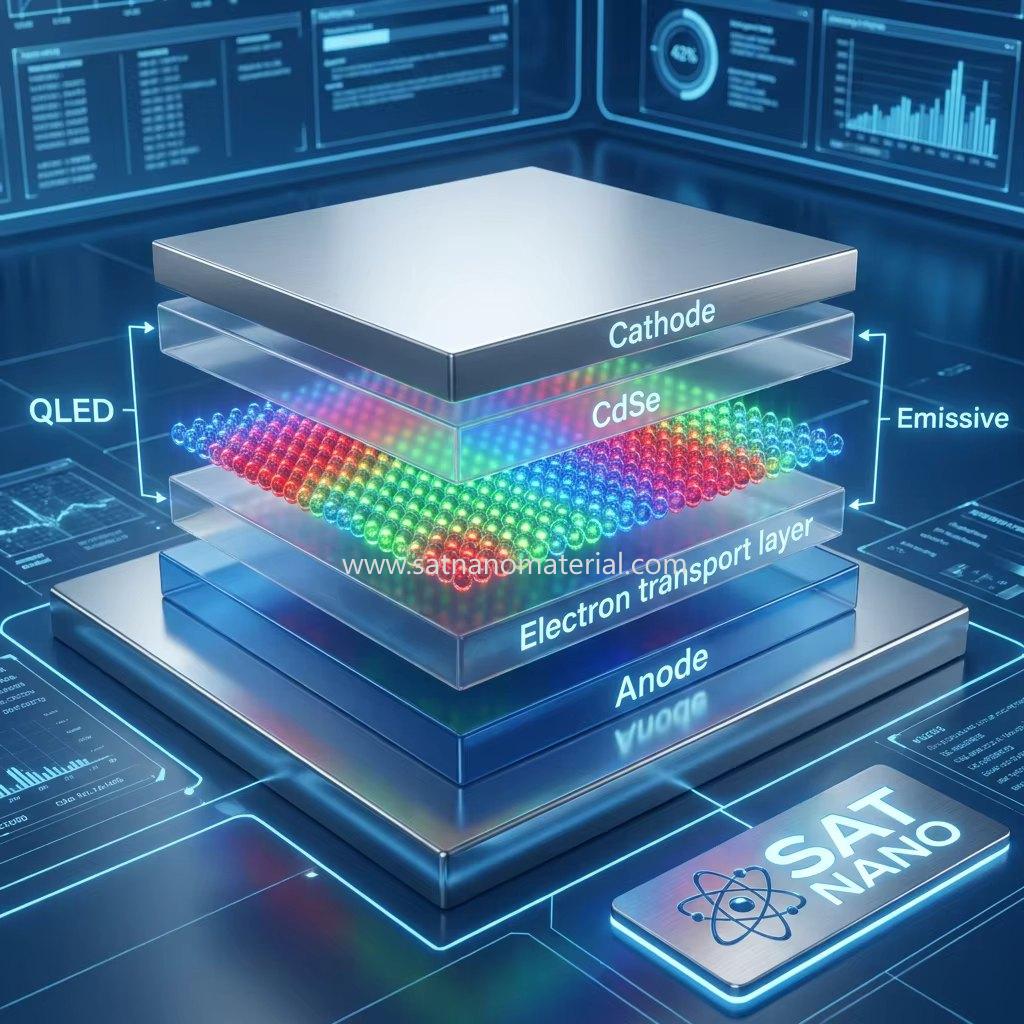
En el campo de los diodos emisores de luz de puntos cuánticos (QLED), los puntos cuánticos basados en CdSe han sido ampliamente estudiados y han logrado un rendimiento excelente en QLED que emiten luz roja y verde. Sin embargo, para obtener luminiscencia azul, los núcleos de CdSe deben ser extremadamente pequeños (diámetro < 2 nm), lo que puede provocar propiedades superficiales inestables y, en consecuencia, una menor eficiencia cuántica externa (EQE) en los QLED azules en comparación con los QLED rojos y verdes.
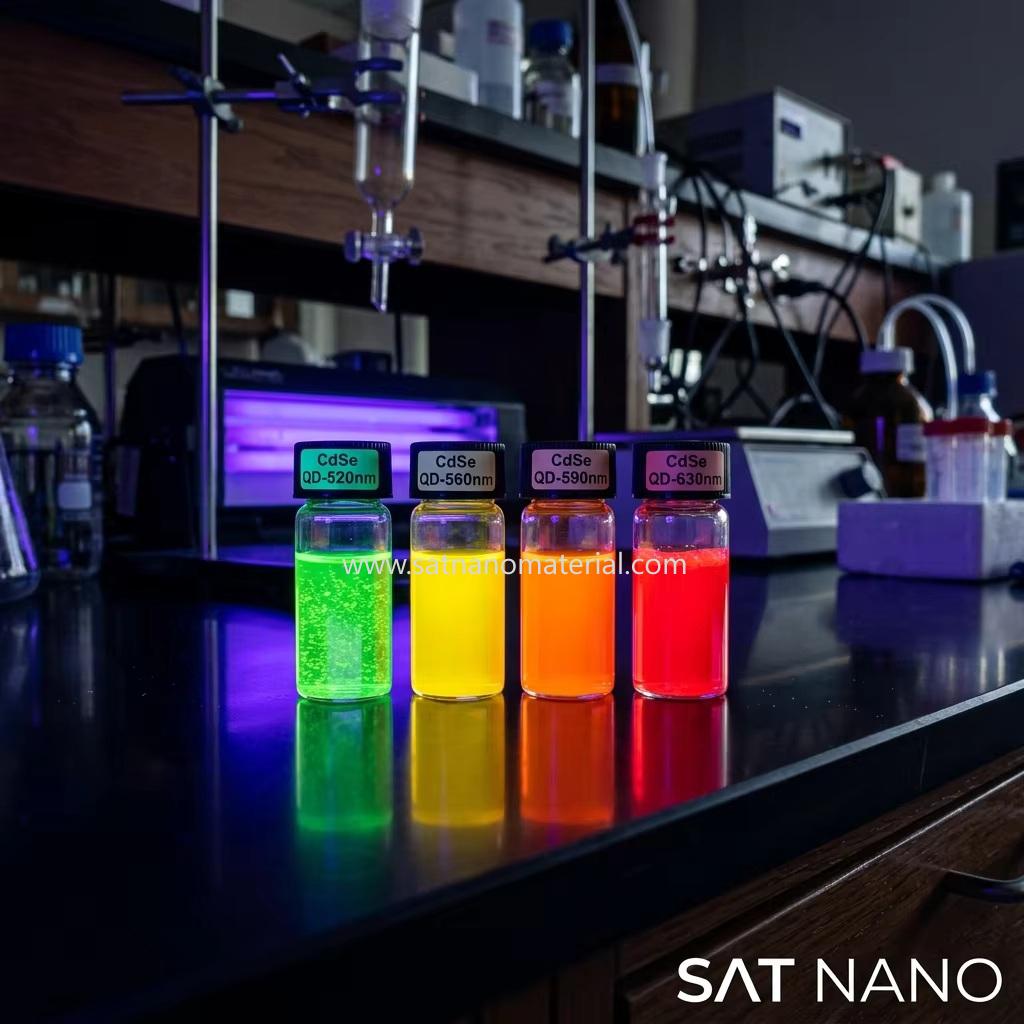
La revista Angew informa que investigadores han logrado preparar dispositivos QLED azules de alto rendimiento mediante el diseño y la síntesis de puntos cuánticos de g-CdZnSeS/ZnS con estructuras únicas, alcanzando una eficiencia cuántica externa (EQE) sin precedentes de hasta el 24 %. El componente de gradiente optimizado liberó la tensión de la red núcleo/capa. Gracias a la supresión de la transferencia de excitones y la recombinación Auger, la eficiencia cuántica externa (EQE) de los QLED azules con grandes núcleos de aleación de CdZnSeS ha alcanzado un hito del 24 %.
En este trabajo, los investigadores sintetizaron un núcleo gigante de aleación de CdZnSeS mediante la difusión de átomos de zinc en el núcleo de CdSeS, lo que permite optimizar la composición del gradiente y liberar la tensión reticular núcleo/capa. La capa externa está compuesta por 1-2 capas de ZnS monocapa, lo que resulta en un cambio gradual en la composición de todo el punto cuántico. Este diseño estructural no solo suprime eficazmente la transferencia de excitones y la recombinación Auger, sino que también reduce el nivel de Fermi, mejorando así el confinamiento interno de los excitones. Los puntos cuánticos g-CdZnSeS/ZnS presentan monodispersión y un rendimiento cuántico de fotoluminiscencia (PLQY) de hasta el 95 %.
Basándose en el excelente rendimiento de los puntos cuánticos, los investigadores han preparado dispositivos QLED utilizando polivinilcarbazol (PVK) como capa de transporte de huecos y nanopartículas de ZnMgO como capa de transporte de electrones. Los resultados muestran que el brillo máximo de los dispositivos QLED de g-CdZnSeS/ZnS es de aproximadamente 57000 cd/m2, el voltaje de encendido es de aproximadamente 3,8 V y la EQE máxima es de aproximadamente 24 %, mientras que la EQE máxima de los dispositivos QLED basados en las otras dos estructuras de núcleo/capa es de solo el 8 %.
Además, la EQE de 48 dispositivos preparados mediante diferentes lotes de experimentos se concentró principalmente en el rango de 21 % a 24 %, lo que demuestra una excelente repetibilidad. A diferentes voltajes de 3 a 9 V, el valor máximo del espectro de electroluminiscencia (EL) se estabiliza en 479 nm. A una densidad de corriente constante de 8000 cd/m², la vida útil (T50) del dispositivo es de 10 horas, y se puede inferir que la T50 con un brillo inicial de 100 cd/m² es de aproximadamente 27 000 horas.
El método propuesto en este trabajo ofrece información valiosa y orientación para el desarrollo de QLEDs azules de alto rendimiento. Investigaciones futuras podrán optimizar aún más los métodos de síntesis de puntos cuánticos y la estructura de los dispositivos QLEDs para lograr una mayor eficiencia y estabilidad.
Título del documento: Mejora del confinamiento interno de excitones para diodos emisores de luz de puntos cuánticos azules eficientes basados en CdZnSeS


 Servicio en línea
 13929258449
 admin@satnano.com
 + 8613929258449