Polvo azul cobalto
Es un pigmento inorgánico azul intenso con excelentes propiedades, que tiene una amplia gama de aplicaciones en la industria, el arte y la investigación científica. A continuación, se presenta una introducción detallada sobre él:
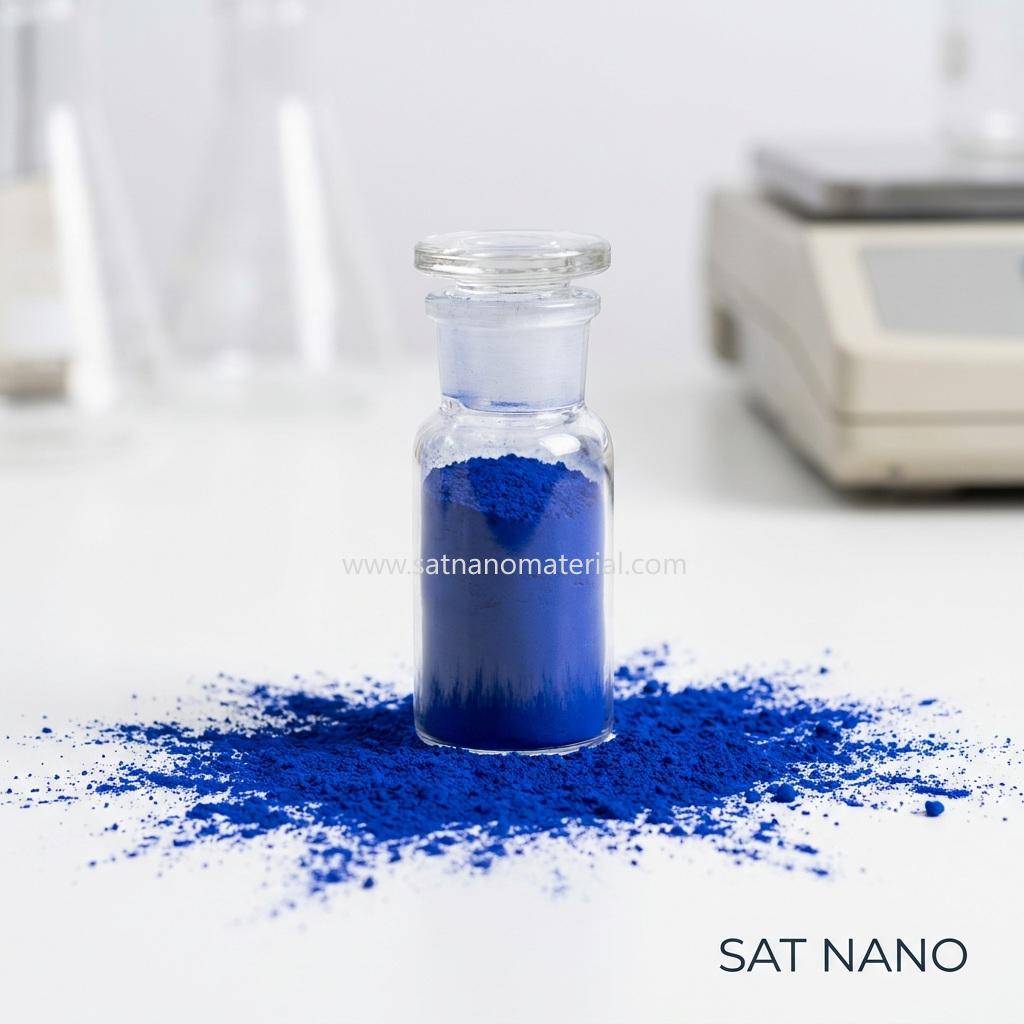
1. Composición química
Nombre químico:
Aluminato de cobalto
.
Fórmula química:
CoAl2O4
Estructura cristalina: Posee una estructura de espinela estable, lo que le permite mantener una estabilidad extremadamente alta en condiciones físicas y químicas extremas.
2. Características principales
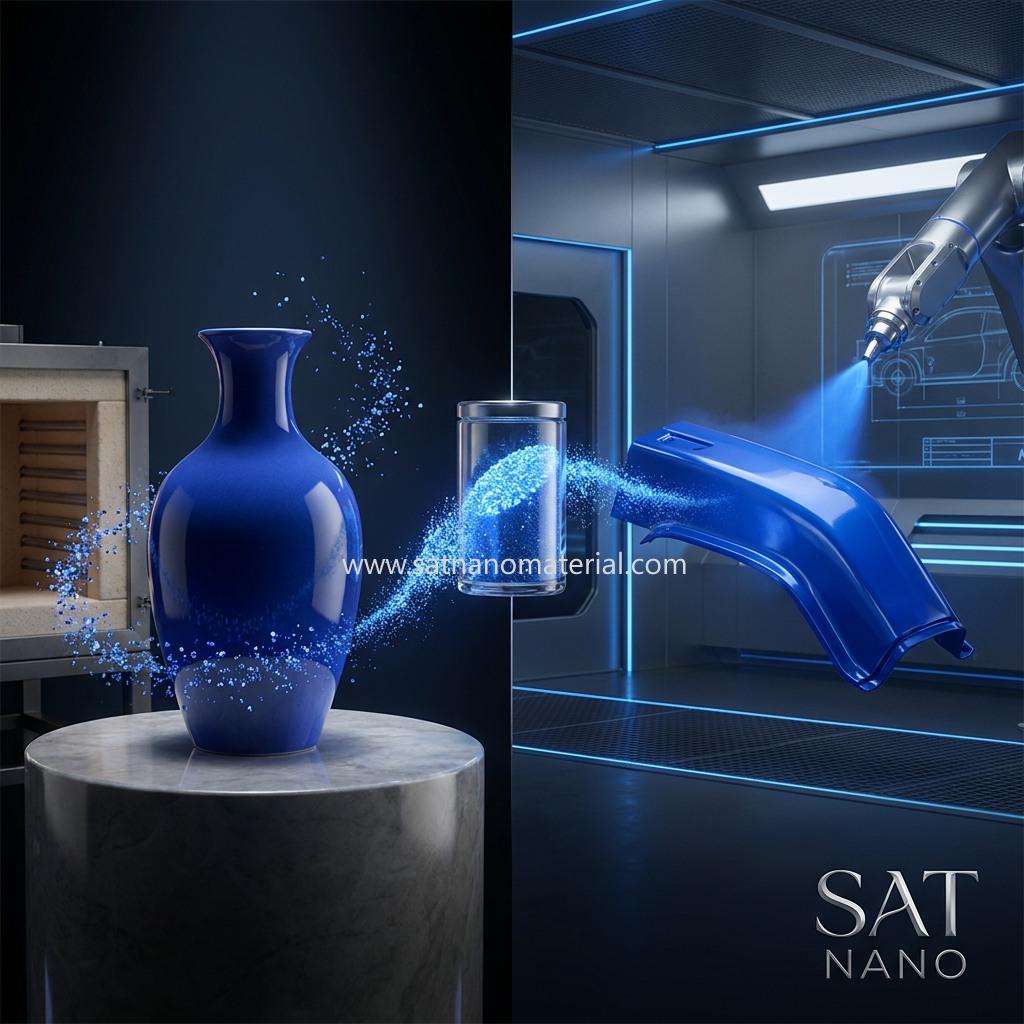
Excelente resistencia al calor: Es uno de los pigmentos más resistentes al calor que se conocen, capaz de soportar altas temperaturas de hasta 1200 °C sin decolorarse ni descomponerse. Por lo tanto, es el colorante preferido en las industrias cerámica y del vidrio.
Excelente resistencia a la intemperie: posee una gran resistencia a los rayos ultravioleta, ácidos, álcalis, disolventes y corrosión atmosférica, y no se decolora ni se vuelve quebradizo debido a la exposición prolongada al sol.
Respetuoso con el medio ambiente: a diferencia de algunos pigmentos que contienen cadmio o plomo, el azul cobalto tiene propiedades muy estables después del curado y se considera un pigmento inorgánico relativamente respetuoso con el medio ambiente.
Excelente poder cubriente y colorante: su tono de color es profundo, puro y posee un brillo único.
3. Proceso de síntesis: ¿Cómo se fabrica?
El rendimiento del polvo azul cobalto depende en gran medida de su método de síntesis, especialmente para productos a nanoescala como SAT NANO:
Método tradicional de estado sólido: El óxido de cobalto y el óxido de aluminio se calcinan durante un tiempo prolongado a 1100 °C-1300 °C. Los cristales en polvo producidos por este método están intactos, pero el tamaño de partícula es relativamente grande (generalmente en el rango de los micrómetros) y la transparencia es baja.
Método sol-gel: la solución precursora se mezcla a nivel molecular y se forma a baja temperatura (600 °C - 800 °C). Este proceso permite obtener azul cobalto a nivel nanométrico (<100 nm), con una superficie específica y transparencia extremadamente altas, comúnmente utilizado en pinturas automotrices de alta gama y tintas para impresoras de inyección de tinta.
Método de síntesis hidrotermal: se genera en un reactor cerrado de alta presión. Este método permite controlar con precisión la morfología del polvo (por ejemplo, esférica o en forma de varilla), lo que le confiere una actividad especial en determinadas aplicaciones catalíticas.
En lo que respecta al azul de cobalto a nanoescala (en polvo), los siguientes conjuntos de datos experimentales clave suelen ser el foco de atención en la investigación industrial y los estudios académicos. Estos datos no solo demuestran sus propiedades materiales, sino que también orientan directamente su aplicación en recubrimientos y cerámica.
A continuación se presenta un resumen de los datos experimentales basados en los productos de azul de cobalto a nanoescala de SAT NANO:
1. Propiedades fisicoquímicas básicas
Estos parámetros definen la calidad y la dispersibilidad del nanoparticulado.
Parámetro
|
Valor típico (grado nano)
|
Método de prueba
|
Tamaño medio de partícula (D50)
|
30 - 50 nm
|
DLS / TEM
|
Área superficial específica BET
|
45 - 65 m2/gm2/g
|
Adsorción de N2
|
Estructura cristalina
|
Fase de espinela
|
XRD (Difracción de rayos X)
|
Densidad
|
4,3 - 4,5 g/cm³
|
Picnómetro
|
Valor de pH
|
6.5 - 7.5
|
Suspensión acuosa al 10%
|
Absorción de aceite
|
20 - 30 g/100 g
|
ASTM D281
|
2. Datos de estabilidad térmica (para cerámicas)
Esta prueba simula el proceso de cocción a alta temperatura en esmaltes cerámicos.
-
Análisis termogravimétrico (TGA): La pérdida de masa es < 0,5 % hasta 1000 °C, lo que indica una estabilidad estructural extrema y la ausencia de componentes volátiles.
-
Estabilidad del color (diferencia de color ΔEΔE):
-
A 800°C frente a 25°C: ΔE<0,8ΔE<0,8
-
A 1200°C frente a 25°C: ΔE<1,5ΔE<1,5
-
Conclusión: El color se mantiene uniforme y vibrante incluso a temperaturas extremas, lo que lo convierte en el estándar de la industria para el "azul bajo vidriado" y la cerámica de alta cocción.
3. Resistencia a la intemperie y a la luz (para recubrimientos)
Esto evalúa la resistencia del recubrimiento a la exposición prolongada al aire libre.
-
Prueba de envejecimiento acelerado de QUV:
-
Condición: 1000 horas de irradiación UV-B (simulando entre 5 y 10 años de exposición al aire libre).
-
Retención de brillo: > 95%
-
Cambio de color (ΔEΔE): 0,2 - 0,5 (En comparación, los pigmentos azules orgánicos suelen mostrar un ΔEΔE de 3,0 o superior).
-
Resistencia química:
-
Inmersión en HCl al 5% (48 h): Grado 5 (Sin cambios)
-
Inmersión en NaOH al 5% (48 h): Grado 5 (Sin cambios)
-
Conclusión: El azul cobalto es prácticamente impermeable a la lluvia ácida, los detergentes alcalinos y la radiación ultravioleta intensa.
4. Rendimiento óptico y colorimétrico
Comparación del azul de cobalto nanométrico con los polvos tradicionales de tamaño micrométrico.
-
Espectro de reflectancia: Presenta un pico de reflectancia pronunciado entre 450 nm y 480 nm (región azul) con una reflectancia superior al 85 %.
-
Poder colorante: El polvo de grado nanométrico proporciona un poder colorante entre un 30 % y un 50 % superior al de las alternativas de tamaño micrométrico. Esto permite utilizar una menor cantidad de pigmento para lograr la misma intensidad de color.
-
Neblina y transparencia: En una capa transparente con una carga del 1%, el azul cobalto nano mantiene una alta transparencia y una baja neblina, ideal para pinturas metálicas para automóviles "Azul mar profundo".
SAT NANO
Somos uno de los mejores proveedores de polvo azul cobalto en China. Podemos suministrar partículas de 50 nm, 100 nm y de 300-500 nm. Si tiene alguna consulta, no dude en contactarnos a través de admin@satnano.com.



 Servicio en línea
 13929258449
 admin@satnano.com
 + 8613929258449


